For millions of people worldwide, gastroesophageal reflux disease (GERD) turns nighttime into a battle against heartburn and discomfort. While medications and dietary changes play crucial roles in management, one often overlooked aspect is sleep positioning. Emerging research confirms what many patients have discovered through trial and error - gravity can be either your greatest ally or worst enemy when it comes to nocturnal acid reflux.
The relationship between sleep posture and GERD symptoms isn't merely anecdotal. Gastroenterology studies demonstrate that esophageal acid exposure time increases significantly when lying flat compared to upright positions. This occurs because the lower esophageal sphincter (LES), the muscular valve separating stomach from esophagus, faces increased pressure when horizontal. Furthermore, gastric juices can flow more freely along the esophageal tract without gravity's resistance.
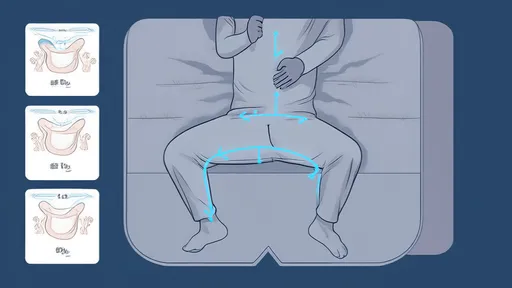
Left-side sleeping has emerged as the gold standard position for reflux sufferers. Anatomically, this orientation places the stomach below the esophagus, allowing gravity to help keep acid where it belongs. The angle of the gastroesophageal junction becomes more acute in this position, creating a natural barrier against backflow. Many patients report dramatic symptom improvement simply by maintaining this orientation throughout the night.
Conversely, right-side sleeping appears particularly problematic for GERD. Imaging studies show this position relaxes the LES while simultaneously positioning the stomach above the esophagus - essentially creating ideal conditions for acid to flow upward. Some research indicates acid clearance time doubles when patients lie on their right side compared to their left.
The dangers of supine sleeping (flat on one's back) present a more complex picture. While not as immediately aggravating as right-side positioning, back sleeping eliminates gravitational advantages and allows acid to pool in the esophagus. This becomes especially problematic for those with hiatal hernias or weakened LES muscles. The position also facilitates respiratory complications when gastric contents reach the pharynx.
Elevating the head of the bed by 6-8 inches creates what physicians call positional therapy. This slight incline utilizes gravity to reduce esophageal acid exposure without creating uncomfortable neck angles that might occur with stacked pillows. Clinical measurements show this elevation can decrease acid contact time by up to 67% compared to flat lying. The elevation works best when achieved through bed risers or specialized wedges rather than pillows alone.
Pregnancy introduces unique positional challenges for GERD management. As the uterus expands, it increases intra-abdominal pressure while simultaneously pushing the stomach upward. Many obstetricians recommend a modified left-side position with additional upper body elevation. Special pregnancy pillows can help maintain this posture comfortably throughout the night.
For combination sleepers who change positions frequently, behavioral modification techniques may prove necessary. Some patients find success with positional alarms or wearable devices that vibrate when detecting right-side sleeping. Others sew tennis balls into the right side of pajamas to create subconscious discomfort when rolling into unfavorable positions.
Body weight distribution plays an underappreciated role in sleep-related reflux. Those with significant abdominal adiposity often experience compounded positional challenges due to increased intra-gastric pressure. For these individuals, combining left-side sleeping with upper body elevation typically yields optimal results while weight management strategies take effect.
Children with GERD require special positional considerations. Pediatric gastroenterologists generally recommend left-side positioning with 30-degree elevation for infants, often achieved through specialized sleepers. Older children usually benefit from standard elevation techniques, though care must be taken to prevent them from sliding down during sleep.
While position adjustments provide significant relief for many, they work best as part of a comprehensive management plan. Patients should still avoid late-night meals, identify personal trigger foods, and maintain appropriate medication regimens when prescribed. Those with severe symptoms or positional vertigo should consult physicians before making drastic sleep changes.
The science of sleep positioning continues to evolve with new technologies. Smart beds that automatically adjust elevation in response to detected reflux episodes are entering the consumer market. Meanwhile, researchers are developing wearable sensors that provide real-time feedback on sleep positions and their correlation with symptom events.
Ultimately, finding the optimal sleep position requires individual experimentation. What works perfectly for one patient may prove ineffective for another due to anatomical variations and symptom patterns. Most gastroenterologists recommend keeping a sleep position diary while implementing changes, tracking both positioning and symptom severity to identify personal best practices.
As awareness grows about the connection between sleep posture and GERD, more patients are discovering they can achieve better nights without solely relying on increased medication. Simple positional adjustments harness basic physics to combat a complex physiological problem - proving sometimes the most effective solutions are also the most straightforward.

By /Jul 28, 2025

By /Jul 28, 2025

By /Jul 28, 2025

By /Jul 28, 2025

By /Jul 28, 2025

By /Jul 28, 2025

By /Jul 28, 2025
By /Jul 28, 2025
By /Jul 21, 2025

By /Jul 28, 2025

By /Jul 28, 2025

By /Jul 28, 2025

By /Jul 28, 2025

By /Jul 28, 2025

By /Jul 28, 2025
By /Jul 28, 2025

By /Jul 28, 2025

By /Jul 28, 2025

By /Jul 28, 2025

By /Jul 28, 2025
