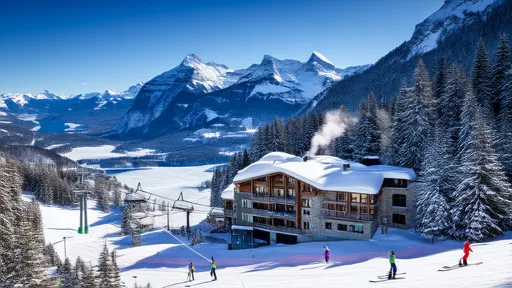
The crisp mountain air bites at your cheeks as you stand at the summit, looking down at a world of pristine white slopes carving through dark pine forests. This is the essence of the Alpine ski resort, an institution that transcends mere sport to become a cultural touchstone, a winter pilgrimage for millions. From the jet-set glamour of St. Moritz to the sprawling, interconnected valleys of the 3 Vallées, these destinations offer a unique blend of raw natural power and sophisticated mountain hospitality. They are not just places to ski; they are self-contained winter kingdoms where the rhythm of life is dictated by the sun, the snow, and the descent.
The history of these resorts is as layered as the snowpack itself. What began as small farming villages in remote valleys, isolated for months by brutal winters, transformed in the mid-19th century with the advent of alpine tourism. The British, in particular, are credited with "inventing" Alpine skiing, treating the mountains not as fearsome obstacles but as glorious playgrounds. Pioneers like Sir Arnold Lunn organized the first slalom competitions, formalizing the thrill of the descent. The construction of railways and later, cable cars, opened up these high-altitude realms, turning hamlets like Zermatt and Chamonix into international destinations. The post-war boom cemented their status, with infrastructure expanding at a dizzying pace to accommodate a growing, democratizing passion for winter sports.
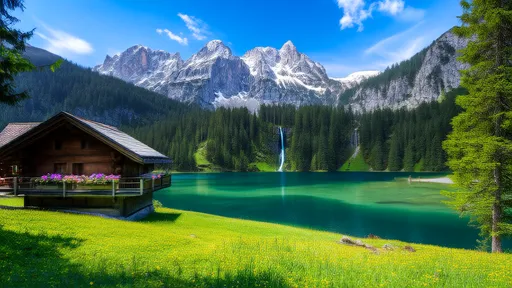
What truly defines the Alpine experience is the sheer scale and variety of the terrain. The Alps form a colossal arc across Europe, and each region, each valley, possesses its own character. The northern resorts, such as those in Austria's Arlberg or Germany's Garmisch-Partenkirchen, often boast picture-perfect, storybook charm with onion-domed churches and timbered lodges. Their snow is frequently reliable, the slopes often tree-lined, providing welcome visibility during the region's trademark Schneefall (snowfall). Venturing further south into Switzerland and France, the mountains become more dramatic, more jagged. Here, you find the giants: the iconic Matterhorn presiding over Zermatt, the glacial expanse of the Vallée Blanche accessible from Chamonix, and the seemingly endless, above-the-tree-line cruising of Les Portes du Soleil.
The infrastructure supporting this vast playground is a marvel of modern engineering. A typical major resort is a web of lift systems, a symphony of gondolas, cable cars, chairlifts, and surface tows. The modern gondola lift, with its heated, enclosed cabins, has revolutionized access, whisking skiers from the bustling village base to serene, high-altitude starting points in mere minutes, often with breathtaking panoramic views. This network is the resort's circulatory system, and its efficiency dictates the flow of thousands of skiers daily, minimizing queues and maximizing time on the snow. Behind the scenes, an army of pisteurs (slope groomers) works through the night, driving massive winch-cats to sculpt the slopes into perfectly corduroyed pistes for the next day's carving.
Yet, the Alpine experience extends far beyond the pistes. The apres-ski culture is a fundamental pillar of the resort lifestyle. As the afternoon sun dips behind the peaks, a palpable energy shifts from the mountains to the village. In Austria, it might begin on the slopes themselves, with sun-drenched terraces like the MooserWirt in St. Anton thumping with music and the clinking of Glühwein (mulled wine) glasses. In France, the atmosphere is often more chic, with stylish bars in Courchevel or Val d'Isère serving champagne and oysters. This ritual of post-ski socializing is where stories are shared, legs are rested, and the community of the mountain is forged.
Accommodation and gastronomy have evolved to meet world-class standards. The days of simple, spartan lodgings are long gone, though charming family-run gasthofs still thrive. Today, you can find everything from five-star palatial hotels with Michelin-starred dining and sprawling spas to luxurious, ski-in/ski-out private chalets with dedicated chefs. The food on the mountain has similarly transformed. While hearty, traditional fare like tartiflette (a rich potato, bacon, and cheese bake) or Kaiserschmarrn (shredded pancake) remains a beloved staple, many mountain restaurants now offer sophisticated menus, with sun terraces providing some of the most spectacular dining settings on earth.
However, this paradise faces profound challenges, with climate change casting the longest shadow. The Alps are warming at nearly twice the global average, threatening the very foundation of the ski industry—snow. Resorts at lower altitudes are increasingly vulnerable, facing shorter seasons and a reliance on artificial snowmaking, an energy and water-intensive process. This has sparked a necessary evolution. The focus is shifting towards creating four-season destinations. Summer activities like hiking, mountain biking, and climbing are being heavily promoted. Winter offerings are diversifying to include snowshoeing, winter hiking trails, and sophisticated wellness facilities, ensuring viability even in less-than-ideal snow conditions.
Sustainability has become a critical operational mantra. Resorts are investing in renewable energy to power their lifts, implementing waste reduction schemes, and promoting local produce to reduce their carbon footprint. The goal is to protect the majestic environment that draws people here in the first place. Furthermore, there is a conscious effort to manage the tourist influx, addressing issues of overtourism in popular villages and ensuring that the local culture and community are not overwhelmed by the very industry that sustains them.
Ultimately, the allure of the Alpine ski resort is timeless and multifaceted. It is the visceral thrill of a perfect turn on a sun-drenched, wide-open slope. It is the profound silence found in a high mountain bowl, far from the nearest lift. It is the warmth of a rustic hut after a long, cold descent. It is the convivial laughter in a crowded bar and the awe-inspiring sight of a sunset painting the peaks in shades of pink and gold. It is a world apart, a carefully curated blend of adventure, luxury, tradition, and nature on a grand scale. As these resorts adapt to the demands of a new century, they continue to hold a unique promise—the promise of winter magic, waiting on the mountain.

By /Aug 4, 2025
By /Nov 7, 2025
By /Nov 7, 2025
By /Nov 7, 2025
By /Nov 7, 2025
By /Nov 7, 2025
By /Nov 7, 2025
By /Nov 7, 2025
By /Aug 4, 2025
By /Nov 7, 2025
By /Nov 7, 2025
By /Nov 7, 2025

By /Aug 4, 2025
By /Nov 7, 2025
By /Nov 7, 2025
By /Nov 7, 2025
By /Aug 4, 2025
By /Nov 7, 2025

By /Nov 7, 2025
By /Nov 7, 2025
