Barcelona's architectural landscape stands as a testament to human creativity, where centuries of design philosophies converge in a vibrant urban tapestry. The city breathes architecture, from the Gothic Quarter's shadowy alleyways to the sun-drenched modernist masterpieces that define its skyline. What makes Barcelona truly extraordinary isn't merely the presence of iconic structures, but how these buildings converse with each other across time, creating a visual dialogue between tradition and revolution that plays out across the city's neighborhoods.
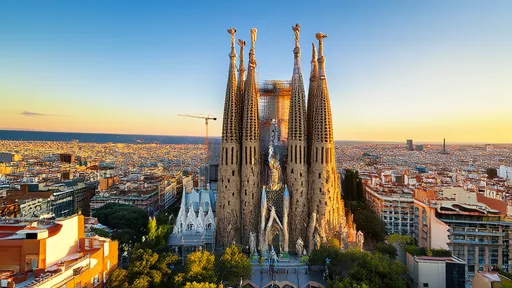
The soul of Barcelona's architectural identity undoubtedly belongs to Antoni Gaudí, whose organic forms seem to defy both gravity and conventional design principles. The Sagrada Família, his magnum opus, represents one of the most ambitious architectural projects in human history. Rather than following traditional church designs, Gaudí envisioned a forest of stone, with columns branching like trees toward a canopy of star-shaped openings that filter celestial light into the nave. The basilica's ongoing construction, now spanning three centuries, has become part of its narrative—a living project that continues to evolve while staying true to Gaudí's original vision. The interplay of light through the stained glass creates an ever-changing atmosphere within, transforming the space throughout the day as sunbeams paint the interior in shifting hues of crimson, sapphire, and gold.
Beyond the Sagrada Família, Gaudí's residential projects demonstrate his revolutionary approach to everyday living. Casa Batlló's undulating facade, covered in a mosaic of broken ceramic tiles, evokes the shimmering scales of a sea serpent, while the bone-like pillars on its lower floors give the structure an almost skeletal quality. The building feels alive, breathing through its irregular windows and organic curves. Nearby, Casa Milà, known locally as La Pedrera (The Stone Quarry), presents a wave-like limestone facade that appears carved by natural forces rather than human hands. Its rooftop, with its surreal chimney sculptures resembling medieval warriors, offers one of the most imaginative urban landscapes in Europe, where functional elements become artistic statements.
While Gaudí dominates Barcelona's architectural narrative, his contemporary Lluís Domènech i Montaner contributed equally groundbreaking structures that expanded the possibilities of Catalan Modernisme. The Palau de la Música Catalana represents perhaps the most exuberant concert hall ever conceived, where a massive skylight of stained glass bathes the auditorium in ethereal light, and sculptural muses emerge from walls playing various instruments. Every surface tells a story, with mosaic patterns, floral motifs, and symbolic references to Catalan culture creating a total work of art where architecture and performance merge into a single experience. Similarly, the Hospital de Sant Pau, with its pavilions set among gardens and connected by underground tunnels, reimagined healthcare architecture as a healing environment rather than merely a functional institution.
Barcelona's architectural wonders extend beyond the Modernisme movement, with contemporary interventions that continue pushing boundaries. Jean Nouvel's Torre Agbar, with its bullet-like form covered in 4,500 individual windows, represents a new era of Barcelona architecture, its nocturnal light shows transforming the skyline into a canvas of color. Richard Rogers' Terminal T1 at Barcelona Airport demonstrates how cutting-edge technology can create spaces of remarkable lightness and transparency, while the Forum Building by Herzog & de Meuron presents a radical triangular form that challenges conventional geometry. These contemporary structures engage in a fascinating dialogue with their historical counterparts, proving that Barcelona's architectural innovation continues unabated into the 21st century.
The city's public spaces serve as the connective tissue between its architectural marvels, with parks that themselves constitute significant works of design. Park Güell, originally conceived as a residential community, became Gaudí's playground for testing his most experimental ideas. The famous serpentine bench, covered in trencadís mosaic work, offers breathtaking views of the city while demonstrating how functional elements can become artistic masterpieces. The park's integration with the natural landscape—with pathways following the terrain's contours and structures emerging from the earth like geological formations—shows Gaudí's deep understanding of the relationship between built environment and nature.
Barcelona's Eixample district deserves special attention as one of the most thoughtfully planned urban developments in Europe. Its distinctive grid pattern, with chamfered corners creating octagonal intersections, was designed to maximize sunlight, ventilation, and visibility—a revolutionary concept in 19th-century urban planning. The district's regularity provides the perfect canvas for the individual architectural expressions of its blocks, where each building competes for attention through unique facades, ornate ironwork, and imaginative details. This harmonious balance between systematic urban planning and architectural individuality makes the Eixample a textbook example of how cities can foster both order and creativity.
The Gothic Quarter presents a striking contrast to Barcelona's modernist extravagance, with its medieval structures telling a much older story about the city's development. The Barcelona Cathedral, with its Gothic cloister housing thirteen white geese—a tradition dating back to the Middle Ages—anchors this historic district. Narrow streets open unexpectedly into secluded plazas, revealing Roman walls that remind visitors of the city's ancient foundations. This historical layer provides crucial context for understanding Barcelona's architectural evolution, showing how each generation built upon what came before while introducing new ideas and styles.
What truly distinguishes Barcelona's architectural landscape is its holistic integration with daily life. Unlike museum cities where historic architecture exists primarily for tourism, Barcelona's masterpieces function as living spaces—people reside in Gaudí's buildings, attend concerts at the Palau de la Música Catalana, and seek medical care at the Hospital de Sant Pau. This integration creates a unique relationship between residents and their architectural environment, where extraordinary design becomes part of the ordinary urban experience. The city demonstrates that innovative architecture needn't be isolated in special districts but can permeate an entire urban fabric, elevating everyday life through beauty and imagination.
Barcelona's architectural story continues to unfold, with new projects adding chapters to its rich narrative while conservation efforts preserve its historical layers. The city serves as both archive and laboratory, where preservation and innovation coexist in dynamic tension. This ongoing architectural conversation—between past and future, tradition and experimentation, local identity and global influences—ensures that Barcelona remains one of the world's most compelling destinations for anyone interested in the built environment. Its architecture doesn't merely provide backdrop for urban life but actively shapes how people experience the city, creating an environment where beauty and functionality merge in extraordinary ways.

By /Aug 4, 2025
By /Nov 7, 2025

By /Nov 7, 2025

By /Nov 7, 2025
By /Nov 7, 2025
By /Nov 7, 2025

By /Nov 7, 2025
By /Nov 7, 2025

By /Aug 4, 2025
By /Nov 7, 2025
By /Nov 7, 2025

By /Nov 7, 2025

By /Aug 4, 2025
By /Nov 7, 2025
By /Nov 7, 2025

By /Nov 7, 2025
By /Aug 4, 2025

By /Nov 7, 2025
By /Nov 7, 2025
By /Nov 7, 2025
