Deep within the heart of South America lies a world of unparalleled mystery and biological richness—the Amazon Rainforest. Spanning nine countries and covering over 2.1 million square miles, this vast expanse of green is often referred to as the "lungs of the planet." But beyond its ecological significance, the Amazon holds secrets that have captivated explorers, scientists, and storytellers for centuries. From ancient civilizations to undiscovered species, the rainforest continues to reveal its wonders to those brave enough to venture into its depths.
The sheer scale of the Amazon is difficult to comprehend. To put it in perspective, it is larger than all of Western Europe combined. Its river system, dominated by the mighty Amazon River, carries more water than the next seven largest rivers in the world combined. This aquatic highway weaves through the forest, creating a complex network of life that supports an estimated 400 billion individual trees representing 16,000 species. The canopy, a dense layer of foliage 100 feet above the ground, forms its own world—a world that remained largely inaccessible until recent decades.
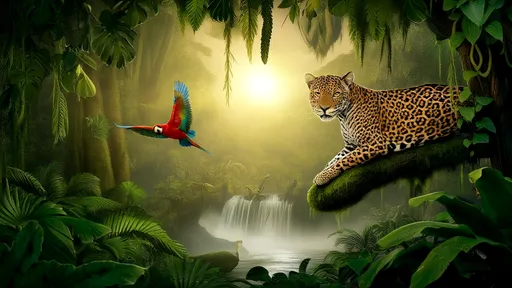
What makes the Amazon particularly fascinating is its incredible biodiversity. Scientists estimate that one in ten known species on Earth calls this rainforest home. This includes 2.5 million insect species, more than 1,300 bird species, and hundreds of mammal and reptile species. Many of these creatures exhibit remarkable adaptations that seem almost otherworldly. The poison dart frog, for instance, carries enough toxin to kill ten grown men, while the jaguar moves through the undergrowth with near-silent grace, its spotted coat providing perfect camouflage in the dappled forest light.
Recent expeditions have continued to yield astonishing discoveries. Just last year, researchers documented a new species of electric fish that can generate shocks of up to 860 volts—the highest voltage of any known animal. Meanwhile, botanists identified several previously unknown plant species with potential medical applications, including one vine whose sap appears to have powerful anti-inflammatory properties. These findings underscore how much remains unknown about this ecosystem; scientists believe they have documented less than half of the plant and animal species living in the Amazon.
The human history of the Amazon is equally compelling. Contrary to earlier assumptions that the rainforest could not support large civilizations, archaeological evidence now suggests that sophisticated societies flourished here for thousands of years. Using advanced laser scanning technology known as LIDAR, researchers have identified the remains of extensive settlements hidden beneath the canopy. These include complex road networks, ceremonial centers, and sophisticated agricultural systems that sustained populations numbering in the millions.
One of the most remarkable discoveries came in 2018, when archaeologists uncovered evidence of a previously unknown civilization in the Brazilian state of Acre. The findings included numerous geometric earthworks—large ditches forming perfect circles and squares—that likely served ceremonial purposes. These structures, some dating back more than 2,000 years, challenge our understanding of pre-Columbian Amazonian societies and their relationship with the forest environment.
Indigenous communities continue to maintain deep connections to the Amazon, with many tribes possessing knowledge that modern science is only beginning to understand. The Yanomami people, for example, use hundreds of plant species for medicinal purposes, while the Kayapo have developed sophisticated methods of forest management that have sustained their territories for generations. Their understanding of the rainforest's intricate ecosystems represents a library of biological and ecological knowledge that has taken millennia to accumulate.
However, the Amazon faces unprecedented threats. Deforestation, driven by logging, agriculture, and mining, has accelerated dramatically in recent years. Between August 2020 and July 2021, the rainforest lost over 5,000 square miles of tree cover—the highest rate in a decade. This destruction not only threatens biodiversity but also impacts global climate patterns, as the Amazon plays a crucial role in regulating atmospheric carbon dioxide levels and regional rainfall patterns.
The consequences of this loss are already becoming apparent. Some areas of the southeastern Amazon have transitioned from being carbon sinks to carbon sources—meaning they now release more carbon than they absorb. Additionally, changing rainfall patterns threaten the forest's ability to sustain itself, creating a dangerous feedback loop where deforestation leads to drier conditions, which in turn makes the forest more vulnerable to fires and further degradation.
Conservation efforts face numerous challenges, from economic pressures to political complexities. However, there are signs of hope. Indigenous-led conservation initiatives have proven particularly effective, with studies showing that territories managed by Indigenous communities typically experience lower deforestation rates than protected areas under government control. International agreements and corporate commitments to eliminate deforestation from supply chains also offer potential pathways toward more sustainable management of the region.
For adventurers and researchers, the Amazon remains a place of endless fascination. Modern expeditions combine traditional exploration methods with cutting-edge technology. DNA sampling of river water can reveal the presence of species without ever seeing them, while camera traps capture intimate moments of wildlife behavior. Satellite monitoring provides real-time data on forest health and human activities, enabling more targeted conservation efforts.
The experience of being in the Amazon is transformative for those who visit. The forest operates on a different timescale, with life and death cycles playing out in accelerated fashion. Fungi decompose fallen leaves within days, while competition for light drives trees to incredible heights. The sounds form a constant symphony—the chorus of frogs at dusk, the haunting calls of howler monkeys at dawn, and the ever-present hum of insects. At night, the forest comes alive with different creatures, their eyes reflecting torchlight like scattered jewels in the darkness.
Climate scientists warn that the Amazon is approaching a potential tipping point, where enough forest loss could trigger an irreversible transition to savanna. The exact threshold remains uncertain, but estimates suggest it could occur when 20-25% of the forest is lost. Currently, approximately 17% has been cleared, meaning the margin for error is slim. The decisions made in the coming years will determine whether the Amazon continues to thrive as a rainforest or undergoes fundamental changes that would affect the entire planet.
Despite the challenges, the story of the Amazon is still being written. Each expedition, each research project, and each conservation initiative adds new chapters to our understanding of this remarkable ecosystem. The rainforest continues to guard its secrets well, revealing them only to those who approach with patience, respect, and humility. As we stand at this critical juncture, the choices we make will echo through generations, determining whether future explorers will find the same wonders that have captivated humanity for centuries.
The mystery of the Amazon lies not only in what remains hidden, but in our relationship with this extraordinary place. It challenges us to reconsider our place in the natural world and our responsibility toward the planet's remaining wild spaces. The rainforest's future—and perhaps our own—depends on finding the right balance between human needs and ecological preservation, between exploration and protection, between mystery and understanding.

By /Aug 4, 2025

By /Nov 7, 2025
By /Nov 7, 2025
By /Nov 7, 2025
By /Nov 7, 2025
By /Nov 7, 2025
By /Nov 7, 2025

By /Nov 7, 2025

By /Aug 4, 2025

By /Nov 7, 2025

By /Nov 7, 2025

By /Nov 7, 2025

By /Aug 4, 2025
By /Nov 7, 2025

By /Nov 7, 2025
By /Nov 7, 2025

By /Aug 4, 2025

By /Nov 7, 2025

By /Nov 7, 2025

By /Nov 7, 2025
